Taxfree

”Flytta taxfree till efter landning”

Foto: Vegard Grøtt/TT

SAS beslut om att lägga ner taxfreeförsäljningen ombord är vettigt. Industrin borde ha kunnat lösa detta för länge sedan, skriver Jan Nordin, tidigare SAS-kapten.

Publicerad 

DEBATT | TAXFREE

Ett ord som för många minner om glädjen över en billig flaska dyr whisky. Kronan på en lyckad semester, om man klarar av att sätta ner den på stengolvet i ankomsthallen utan att den går sönder.

SAS tog i dagarna ett vettigt beslut om att lägga ner taxfreeförsäljningen ombord, (formellt inte taxfree inom Europa) vilket inte påverkar ovanstående då det fortfarande går att köpa det mesta man behöver – inte bara sprit – före flygning. SAS bevekelsegrunder är rimligtvis en kombination av miljöhänsyn och ekonomiska realiteter. Ingen handlar tillräckligt mycket från försäljningsvagnen, som ändå väger rätt mycket och alltså kostar extra bränsle att ha med ombord.

Då undrar vän av ordning det som många grubblat över i ett flertal decennier utan att hitta en vettig lösning. Varför tillåts över huvud taget försäljning av varor före flygning, där alltså tonvis med allt från läppstift till tunga glasflaskor (åter igen, för ordningens skull, inte taxfree inom Europa) släpas ombord och genererar ökade utsläpp. Miljöaspekten är sent påkommen och, som ingen kan ha missat, dagsaktuell. Det finns mängder med andra anledningar (se nedan) att inte bara följa SAS exempel utan också att styra all försäljning över huvud taget till efter landning. Här krävs bland annat tullens inblandning med lite nytänk i bestämmelserna. Lite otippat blev för några år sedan Norge ett föregångsland genom att öppna upp en mycket populär taxfree-butik i ankomsthallen på Gardemoen. Finns dessbättre sedan länge på ett antal ställen som Dubai, New Delhi, Reykjavik, Köpenhamn med flera, men de stora shopping-arenorna finns över hela världen – i avgångshallarna.

Att av charterbolag för ekonomisk överlevnad frakta två ton taxfree-varor tur och retur Stockholm–Bangkok (men minska på dricksvatten och bränslereserver på grund av vikt), för att charterpassagerare skall få sina påsar i stolen på hemvägen, i stället för till exempel i ankomsthallen, är kanske så dumt att det borde straffbeläggas. Lösningsorienterade läsare kan ju själva fundera ut hur förändringar skulle kunna göras utan att volymer och penningflöden påverkas. Mindre lösningsorienterade representanter för inblandade aktörer såsom taxfree-butiker, charterbolag, reguljärbolag, tullmyndigheter med flera skulle, om de skickades till en verkligt trist kursgård med hot om att inte bli hämtade förrän de hade en lösning, bli färdiga samma förmiddag. Det handlar nämligen inte om någon raketforskning och beslutskompetens finns bevisligen på vissa händer; beslutet om max 100 ml flaskor i genomskinlig enliters plastpåse, efter en ny hotbild, togs mer eller mindre över en natt.

Argumenten för en ändring är många. Vikten har redan nämnts. Vikt kostar också i reda pengar. Att frakta ett extra ton kostar cirka 4 procent extra bränsle per timme, alltså cirka 40 kg/timme. Vid ett kilopris på 10 kronor så kostar det alltså runt 400 kronor i timmen i onödan. Sedan är det bara att multiplicera. 50.000 flygningar i snitt 4 timmar långa med i snitt 100 passagerare som i snitt handlar ett kilo skulle ge en onödig kostnad för extra bränsle på 8 miljoner svenska kronor – per dag. Strax under 3 miljarder per år. Och det lågt räknat. Bara det borde få fart på cheferna på kursgården.

Säkerheten. Glasflaskor används för att det upplevs av kunderna som ‘more appealing’ än betydligt lättare plast dito. Glasflaskor kan också användas som vapen. Glasflaskor har punkterat evacuation slides, då passagerare känt starkt för att ta med sig sina taxfree-påsar vid nödutrymning (se första raden). Andra brännbara vätskor är förbjudna, men inte cognac. Mer plats ombord. Mindre att bära på. Ingen möjlighet att berusa sig och bli oregerliga på egen medhavd sprit, en ej ovanlig hotbild, som ofta orsakat mellanlandningar. Tid att handla medan man väntar på bagaget, etcetera.

Debatten har alltså förts i decennier bland frustrerad flygande personal. Men fokus är just i dagarna extra stort på miljöaspekterna. Om 250 passagerare på var och en av världens 2 000 heavy jets handlar två kilo varor före flygningen bränner de tillsammans på grund av detta upp 400 000 kg flygbränsle – per dag. 146 000 ton på årsbasis. Helt i onödan. Hallå miljön. Industrin borde ha kunnat lösa detta för länge sedan, men lite hjälp av miljöaktivister, som verkligen kan räkna på onödiga utsläpp, är kanske den draghjälp som i dag behövs, med lite debatt runt en verklig typ av flygskam. Hög tid kan man tycka.

Jan Nordin
tidigare SAS-kapten
Runway length – or the lack of same

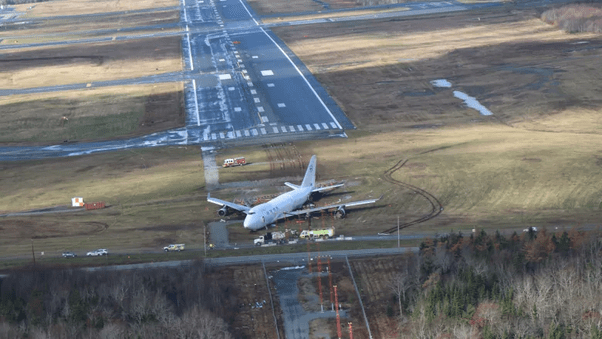
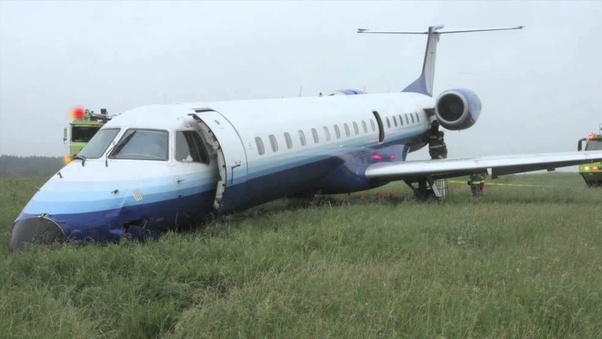
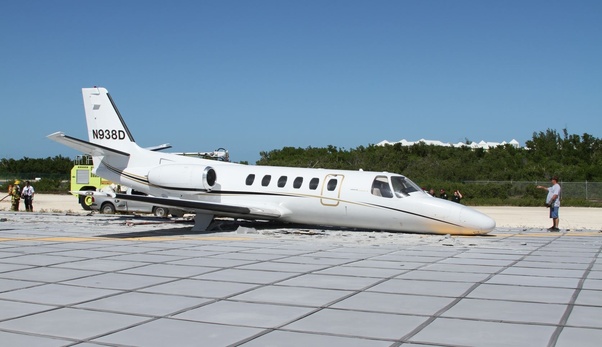
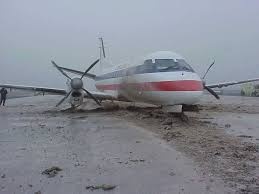
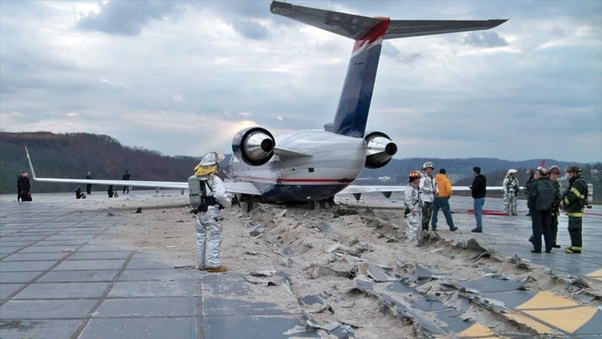
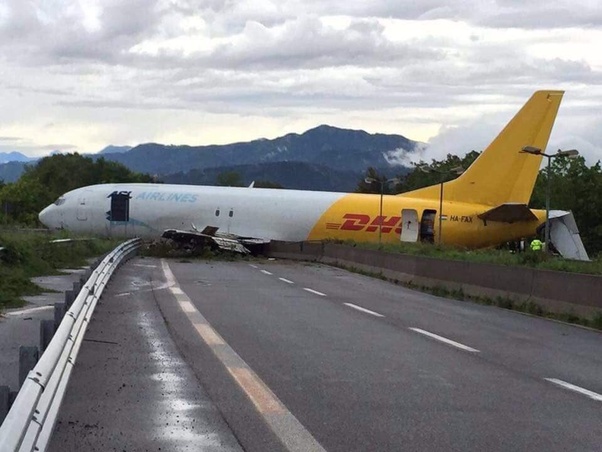
Runways has been mentioned previously in this blog, for good reason. Runway excursions ranks number two of the mishaps you might experience as a passenger, (smoke in cabin being number one, see separate article). Aircraft are unable to stop on available runway length on a regular basis. This year alone 16 airliner have departed the end with various results, raging from total hull losses (the offroad capabilities of modern jetliners are, as previously mentioned, utterly disappointing) to minor or no damages. For passengers and crew, hazards are normally limited to minor injuries, incurred in cases of evacuation.

The reasons runways are not long enough are as hard to grasp. At some places extensions of 1500 feet are not possible due to limitations in the surrounding terrain, thus being exempted from this debate. At some places the realization that something has to be done has brought about an invention called EMAS (Engineered Materials Arrestor System). In short, aircraft are brought to a standstill, depending on speed when leaving to allotted thousands of feet of runway, in a couple of hundred feet, by having their landing gears getting stuck in cleverly manufactured ”mud”. See last picture below.

Sufficient (?) amount of EMAS cost approx. 10 MUSD. So does 1500 feet of extra runway. The EMAS has to be repaired after each mishap to the extent of 2,5 to 4 hundred thousand dollars. 1500 extra feet if used, does not. The airport has to be closed if stuck in EMAS, if the runway in question is the only runway. Passengers has to be evacuated by means of stairs, or escape chutes in severe cases. None of this applies to an airport with adequate runway lengths.

Newly built airports often have adequate runway lengths, but some don’t.  Airports with marginal runways causes (sometimes huge) take-off- and landing weight penalties, and the length of pilot training is inversely proportional to the length of the runway.                The results are obvious. Pick a favorite among the few samples below;

main-qimg-e45162842f46c7e9a9c89c4d5c539fbd.jpgmain-qimg-307a4f5246933b3306f46134de2c12b8.pngmain-qimg-64cddacf7babcce741c4e9f7ef8c04ea.jpgmain-qimg-884e77db4b231a3cdadd30aa88caa48c.jpgmain-qimg-af299f9101b6f66044d7679199af2ae4.jpgmain-qimg-5db7b2ad0957526852738a77fb1b1be9.jpgmain-qimg-0ce3beb1e08d37b5eaba1def2a662368.jpgmain-qimg-844f53bba566d3b12c79f2ab2e7f90e9.jpgmain-qimg-3314c96e790cb6b395f41cb5ed1912c8.jpg

You get what you pay for

Media went after SAS in a big way recently, during an industrial conflict, not so much the company itself, but the pilots. Media, being mainly influenced by Swedish industry, which hate disruption in transportation, went all out. Fake news about demanded pay raise and average monthly pay took precedence over what the conflict was really all about; keeping jobs in Scandinavia, caring about the SAS trade mark – and not having to sit in the cockpit for 14-16 hours, trying to do a really god job at the end of that period. (See previous article about fighting fatigue)

If it was realizing the unfairness or not, media has now stated extremely encouraging news about the old prestigious airline. Surprising to some people, possibly, but not so much to company employees. SAS is a top ranking airline. Number 4 on a list of 72 (topped by Qatar Airways). Its major competitor on the Scandinavian market, Norwegian Airlines, is found at the very bottom at number 67. Ryanair to no ones surprise (shouldn’t be?) came number 68.

The rating was made measuring punctuality, service and passenger care-taking in the event of delayed or cancelled flights. Regarding that kind of passenger handling, SAS came out on top of the list. Hence the headline of this article. Normally you don’t buy a ticket from one special airline just to be well compensated, if the flight is cancelled. You buy a ticket to get transported in a system, where the airline is honor – and sometimes legally bound to get you where you want to go, no matter what. A low cost airline is of course – in order to stay low cost – not keen on dishing out a lot of money in any kind compensation, and some just flatly refuse.

The price you pay for a regular airline, such as SAS, might very well be higher than a budget competitor, but the add-ons (charges for telephone calls, to have a printed boarding pass, for all kinds of luggage, for choosing a seat, everything to eat and drink onboard – so far not for restroom usage – ), might very well end up higher still. Now, when you are sitting up there at 35.000 feet doing in excess of 500 mph, having forgotten the cost for all the adds-on, and just enjoying your extremely cheap fare, are you interested in what else this low-cost operator didn’t want to pay more for, than absolute minimum (such as fuel reserves, maintenance, crew training, replacement crews etc.)? Do they have a pilots union to cover a pilots behind if he doesn’t want to fly sick or tired or with a plane that in his opinion is in no condition to fly.

Smoke in cabin

Considering the 3 million flights per month performed by all kinds of aircraft with great success, there is really no need for any statistics on mishaps. The risk of experiencing anything close to dangerous are next to nothing. One thing stands out, however. Among the rather often present turbulence – which is not dangerous if you’re strapped in -, the odd engine problems, hydraulic problems, drone incidents, laser attacks and runway excursions, all of which occur a few times per month worldwide – and normally don’t pose any real danger -, there is smoke.

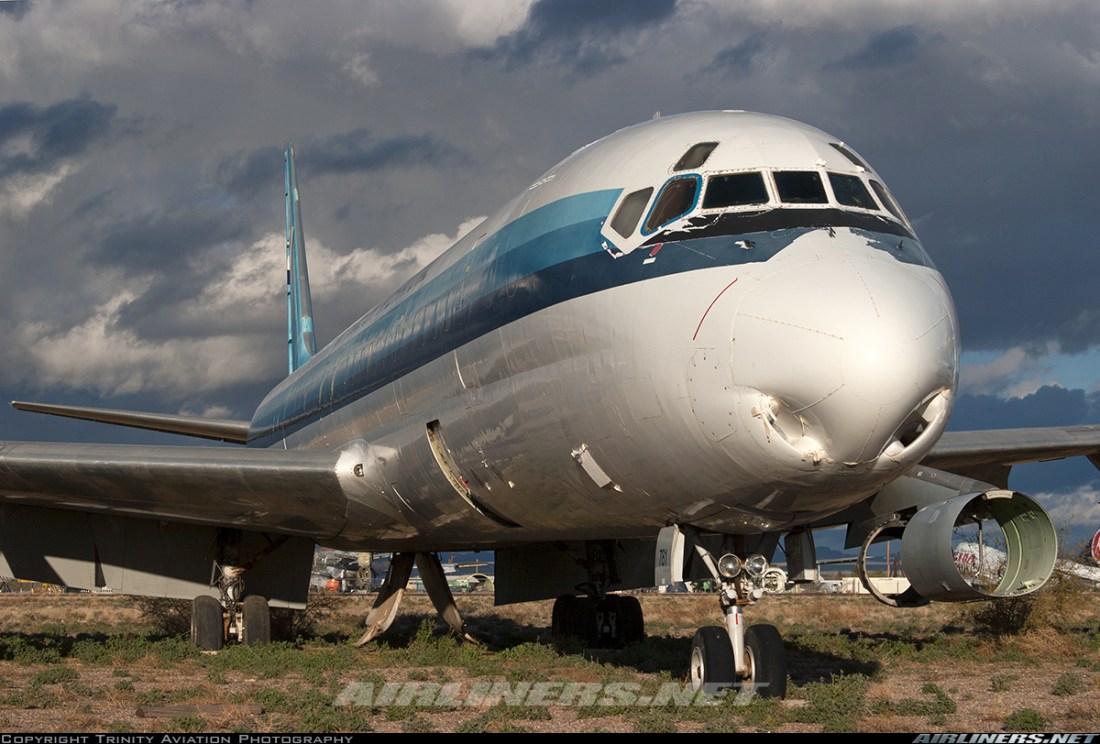
Most airliners are pressurized by bleed air from the engines. (One exception, an example of which is the slightly tired looking old workhorse below. The Douglas DC-8 had 4 cabin compressors in the nose, whose air intake made the aircraft famous as ”the only airliner that smiled back at you”.)5159653.jpg

Bleed air can be contaminated by external and internal fumes. Most cases are caused by internal leaks, where engine oil mixes with the air extracted for cabin pressurization. Normal remedy is an unscheduled/emergency landing, in some cases requiring medical treatment, depending on the extent of air contamination. It happens to all aircraft types, making a list of affected models unimportant, since it is the general condition of the jet engines that is the root of the problem, but here goes:

Since the beginning of this year: A320 (10), Embraer (7), Boeing 737 (7), A319 (4), A321 (3), B747 (3), Bombardier, A340, A330, ATR42, B757, B777 2 each, A300, B787 and one unknown 1 each. All in all 49 so far, or just under 3 per week. Statistically not much to fret about, but enough for efforts by a couple of US congressmen to demand legislation of some kind to make air safer to breathe, by means of crew training and sensitive sensors.

Concerned citizens can shop for small breathing devices. Less concerned can try a wet cloth, in the unlikely event that one is one in almost a million.

Liten (lite) förvirrad aktivist som inte ville sitta.

Som alla aktivister hade Elin en tanke i huvudet som var större än det mesta. Hon hade heller inte uppnått tillräcklig ålder för att förstå att allting inte kretsade runt hennes för tillfället geniala

idé. Inte heller insåg hon att sättet hon ville manifestera på var fel valt. Dels för att det inte fungerade. Folk som skall utvisas utvisas. Det blir bara dyrare med den störning hon stod för. Dels drabbade det samtliga andra passagerare ombord, som tydligt markerade att de ville komma iväg, men för en äkta aktivist är ju alla, som inte håller med – eller som drabbas – bara nödvändiga offer.

Utan att känna till alla detaljer så verkade det som om det inte spelad så stor roll vem hon agerade för, då den unge man som ursprungligen skulle utvisas hade ersatts av en äldre. Om man inte bryr sig mer om vem man vill skydda utan generellt sett är emot samtliga utvisningar, så blir det väldigt dyrt med flygbiljetter och man uppnår förmodligen bättre resultat som skolkande skolelev utanför riksdagshuset, blott med ett annat plakat än det som vanligen syns där av en något mer begåvad aktivist.

Att göra sig omöjlig ombord på ett flygplan och sedan påstå att man inte gjorde något olagligt måste ha krävt juridisk hjälp. Advokater har ju den otacksamma – men kanske spännande – uppgiften att försvara någon, som man vet har gjort något skumt, och sedan med spetsfundigheter och kryphål försöka förvirra domstolar. Här blev det ju både fel och larvigt när man ville påskina att Elin inte förstått att just kaptenen ville att hon skulle sitta ner. Det var ju bara en i kabinpersonalen som insisterade. Hade hon förstått att också kaptenen ville att hon skulle sitta ner, så hade hon varit jättelydig direkt. Bra försök, men elakt att lura Elin att det resonemanget skulle fungera. Chansningen fungerade inte, dels för att switchen för FASTEN SEATBELT-skylten sitter i cockpit och att kaptenen alltså redan uttryckt sin önskan, och för att alla i besättningen är kaptenens ställföreträdare när det gäller lag och ordning ombord, vilket dessutom borde vara väl känt.

Vad många undrar – om Elin nu så uppenbart saknade vägledning av just kaptenen – är varför den vägledningen uteblev så länge. Frågorna hopar sig. Den lämpligaste vägledningen hade varit att ledas av planet, förhoppningsvis utan det våldsprovocerande motstånd som ofta drabbar t.ex. ordningsvakter i tunnelbanan. Alla kaptener är ju inte närstridsutbildade. Men var var han?!?

Domstolen gick inte på dimridåerna och dömde förmodligen förståndigt mitt emellan försvarets och åklagarens krav. Det finns ju ingen anledning att sätta puckot i fängelse. Det finns ju inget ont i henne vad man vet, bara en viss förvirring. I och för sig hade hon kunnat fått tio år så det garanterat var slut med tokigheter inom trafikflyget. Men om inte det lindriga straffet skapar fler liknande fall så är väl ändå allt frid och fröjd. Det får framtiden utvisa. Civilkurage och även civil olydnad kan i vissa fall försvaras och t.o.m. förordas, men kräver alltid begåvning, gott omdöme – och hänsyn.

Oro i luften.

Nu står Boeings senaste 737-modell på marken. Boeing ansåg det inte nödvändigt från början. Inte heller FAA. Media skrämde upp den flygande allmänheten och en stor del av både flygbolag och myndigheter runt om i världen tog det säkra före det osäkra och förbjöd vidare flygning. Självklart fattade Donald Trump trenden och förbjöd, han också. Boeing har mycket på PR-sidan att jobba med framöver.

Vi får givetvis tämligen snart veta exakt vad som hände i de båda olyckorna. Därav ingen anledning att spekulera, förutom i en liten detalj. Om det, som det i nuläget lutar mot, är samma orsak, så måste en fråga ställas.

Alla moderna flygplan är synnerligen säkra. Boeing ville i sin senaste modell bygga in en extra säkerhetslösning, med en flygläges-avkännare som skulle sänka nosen om flygplanet närmade sig stall = farligt låg fart. Den givaren verkar felaktigt ha givit signaler även i normala farter. Det kan t.o.m. ha inträffat ytterligare ett antal gånger där besättningarna lyckats hantera problemet.

Anledningen till Boeings initiala framhärdande att flygplanet är säkert baserades på att det sen tidigare fanns en procedur i nöd-checklistan som hanterade en s.k. ”runaway stabilizer”, vilken alltså är den del av flygplanet som tillsammans med höjdrodret påverkar nosläget. Detta hade man tydligen något nödtorftigt meddelat sina kunder, tillsammans med informationen om det nya systemet.

Alla instruktioner och procedurer måste läras in och tränas i simulator. Detta kostar stora belopp och i dagens låg-pris-bolagsstyrda ekonomiska situation i industrin är inte alla bolag lika noga med sin pilotutbildning. Boeings MAX 8 modell (351 st) har flugit c:a en kvarts million flygningar sedan första haveriet. Felet är alltså inte vanligt, men tillräckligt vanligt för att ifrågasätta kvaliteten av installationen, om det nu var samma olycksorsak. Det måste givet utredas och åtgärdas, därav flygförbudet. Värre är att om rätt utbildning skall kunna klara av en dylik nödsituation, och de etiopiske piloterna fem månader efter förra haveriet inte fått den träningen, så pekar det på andra hotbilder i industrin.

Dagens extrema flygsäkerhet beror bl.a. på att nästan allt som kan gå galet redan hänt och åtgärder vidtagits för att förhindra upprepning. Den ekonomiska pressen på industrin har skapat en situation med nya hotbilder, där bristande pilotutbildning är en. Andra hotbilder är undermåligt underhåll, bristande bränslereserver och extrema tjänstgöringstider.

Om det är någon annan orsak till det senaste haveriet gäller inte det mesta av ovanstående. Då har vi en större anledning till oro. Och Boeing en ännu större. Om det å andra sidan är det man nu tror, så kommer Boeing att modifiera eller helt enkelt de-aktivera systemet, och sedan finns det ingen anledning att vara orolig för just den flygplantypen.

Pilot error

In the aftermath of two recent disasters, were crew actions – or the lack of same – has been mentioned as crucial factors, there is need to look at what is commonly a misused phrase called ‘pilot error’.

When a well trained pilot makes a mistake there is normally at least one colleague around to correct it. Thats the main reason for a minimum of two pilots on passenger airliners. The reason for a mistake can be a lot of things, but mistakes are naturally not made on purpose. Humans makes mistakes. In the pre-CRM* era a captain could make a fatal mistake unchallenged by his fellow crew members. The worst catastrophe so far was made by a well trained captain – in fact he was an instructor – when he did not listen to his engineer, who had serious doubt wether or not they were cleared for take-off – which they were not -, followed his faulty mindset that they were, and smashed his 747 into another 747 taxiing on the runway, killing 582 people. That was a pilot error if there ever was one.

* CRM – the acronym for using all resources already on your payroll – Crew Resource Management. That catastrophe brought about an important change in the running of things. In short both (or all three) pilots have to agree on everything, and if they don’t, the reason has to be established why not. Co-pilots have to interfere with what the captain is doing wrong, which was unheard of before – and still is a problem in some cultures. It the above accident CRM would have worked like this:

Pre-CRM: ”Are we really cleared for take-off?” ”What?” ”Are we really cleared for take-off?” ”YES”. 582 killed.                                                                                                                            Post-CRM: ”Are we really cleared for take-off?” ”What?” ”Are we really cleared for take-off?” Aircraft ”Tower, confirm we are cleared for take-off!” Tower ”Negative, hold your position”. Everybody happy.

There are other pilot errors, not yet quite that fatal, happening when well-trained crews  are challenged with situations beyond their ability to control. Here ‘pilot error’ is not that obvious. If competent people by complacency or over-ambition end up in a fatal situation it is definitely a simple human error. Then again, if pilots too tired to think straight, or with limited training for what they are required to handle, make mistakes while doing the best they can, an incident or an accident cannot be blamed on ‘pilot error’. It is a sad management error. The difference between pilot error and management error is that the former is a simple – but sometimes fatal – involuntary mistake by one or two human beings, whereas the latter is a deliberate, albeit sometimes unwitting, acceptance of ways to operate.

The worst accident ever, that did not happen, was a management error, that – if the disaster had not been adverted in the very last moment – would have been blamed on pilot error. A fatigued crew (check previous chapter in this blog on ”Fighting Fatigue”) with inadequate information (check previous chapter in this blog on ”Notams”) about the state of runways at their destination, was a few seconds – or feet – away from landing on top of four airliners waiting for take-off on a taxiway.

In the economic squeeze brought on the industry by low-cost airlines, regular airlines have to cut corner as well. Extended duty times is one way. Insufficient pilot training is another one. Sloppy maintenance and insufficient fuel reserves are two more. In the latest two disasters pilot errors have been introduced as a reason for what happened. These crews did the best they could, just as the crews in four the latest accidents, the most renowned being Air France 447,  where crew actions have been blamed. The major part of the responsibility in all those accidents lands in the lap of the involved airline managements.

In the latest two accidents, an aircraft construction fault was also a contributing factor, and proper training was not provided. Pilot errors have in the past caused a lot of fatal accidents. In the future, management errors and cost-cutting will be responsible for most of those, most likely by one or more of the four recent hazards listed above.


20 biggest airlines

Size is important. Goes for airlines too. In the US, mergers has formed mega carriers, like American, Delta and United. In other parts of the world they are just big by themselves, or some also via mergers. The 20 largest are listed by available number of seats available last year:

20. Alaska Airlines / 19. Aeroflot Russian Airlines / 18. Air France / 17. British Airways / 16. Air Canada / 15. LATAM Airlines Group / 14. All Nippon Airways (ANA) / 13. IndiGo
12. Emirates / 11. Lufthansa / 10. Air China / 9. Turkish Airlines / 8. EasyJet
7. China Eastern Airlines / 6. China Southern Airlines / 5. Ryanair / 4. United Airlines
3. Southwest Airlines / 2. Delta Air Lines / 1. American Airlines

To airline buffs number of seats are less important than actual number of aircraft. Here is the real deal with number of aircraft within brackets:

20. Air Canada (180) / 18. Air France (206) / 18. IndiGo (206) / 17. Alaska Airlines (233)
16. Aeroflot Russian Airlines (253) / 15. British Airways (267) / 14. Emirates (271)
13. All Nippon Airways (294) / 12. LATAM Airlines Group (309) / 11. EasyJet (317)
10. Lufthansa (338) / 9. Turkish Airlines (350) / 8. Air China (418) / 7. Ryanair (439)
6. China Eastern Airlines (525) / 5. China Southern Airlines (597)                                            4. Southwest Airlines (749) / 3. United Airlines (765) / 2. Delta Air Lines (879)
1. American Airlines (956)

Quite a few pilots are needed to fly all these aircraft, hopefully all well educated and well trained. As air-travel dubbles in the coming decades, Boeing estimates a need for 790.000 new pilots by 2037, more than 200.000 in the US alone. Seems like flight academies is one of the hottest businesses ahead. The shortage of well trained pilots is unfortunately evident, since the reason more than 100 airlines are banned in EU is not because of substandard aircraft only. On the contrary, most fast-growing low cost airlines have brand new aircraft. Some put pilots with just a few flight hours in the right seat of modern jets. The co-pilot of the Ethiopian aircraft that crashed the other day had 200. Training is expensive. Some don’t even train aviation English. Google ”Chinese pilot in New York” and enjoy or be scared.


Time to worry

The reason for an aircraft accident is always explained in detail, once all investigations are completed. Consequently there is normally no need for speculations. Yesterdays crash with an Ethiopian airliner is no exception, but for one detail. Should the reason for the accident be the same as for the unfortunate budget carrier Lion Air last October, some thing needs to be discussed.

All modern aircraft are extremely safe.  The Boeing MAX model was made even safer by a system that was ment to prevent the aircraft from stalling, by bringing the nose down at dangerously low speeds. What seems to have caused the Lion Air accident was a faulty sensor, causing the stabilizer to bring the nose down at normal speeds. Boeing has obviously ment that this could be handled by the already existing Non Normal or Emergency procedure for a ”runaway stabilizer”, and instructed airlines accordingly.

There are procedures and instructions for every conceivable emergency. These instructions needs to be taught and procedures trained. In simulators, normally. Now, not all airlines are as extremely safe, as the aircraft they are operating. Some airlines brought this new information, regarding the extra input source to the stabilizer, to their pilots, and trained them to handle a malfunction. Some didn’t. In the era of low-cost airlines every penny counts (ref. Richard Quest), and training is very expensive. What seems to be the case with Lion Air is that their pilots were not trained enough. Should the Ethiopian pilots also have been in that dire position, there is reason for concern.

The MAX model has flown approx. a quarter of a million flights since last October, mentioned only to indicate, that the sensor problem – if it indeed was a sensor problem this time – is very rare, but still frequent enough to worry about the quality of the installation. Worse than that is something, that poses a threat to the whole industry, regardless of type of malfunctions. When something goes wrong, measures are taken to make sure it never happens again, hence the high standard of flight safety now enjoyed worldwide, since almost everything has happened already. If pilots today –  five months after the Lion Air crash – still are not trained to handle that particular emergency, there is definitely reason for concern.

All of the above can be disregarded, should post-crash investigations indicate a different reason for yesterdays accident. Apart for one thing. There are airlines out there with inadequately trained pilots. One of the threats in a squeezed economy situation. The other three are inadequate maintenance, inadequate fuel reserves and excessive duty times. Time to worry. A little.

A story

There was initially a promise in this blog of some good stories. Here is one:

The US eastern seaboard was in the early eighties hit by sensationally bad winter weather. All three major airports in New York as well as airports in Washington, Philly and Boston were closed. All flights diverted. The herd of European westbound airliners were scattered all over northeast Canada, some to military airport. One unfortunate Scandinavian 747 ended up at a place where they didn’t even have a stair to unload passengers. Just as well since they didn’t have a terminal building either, just some small military installations. Then the waiting started.

There was absolutely no information to be had regarding expected time of delay. That was in turn the only information available to the passengers. To some that was just not good enough and irritation spread, despite the crews efforts to keep people reasonably happy. Then they ran out of things to keep people happy and no catering was available. After nine hours there was not a drop to drink and not a crumb to eat. Small children started crying and things were getting desperate. The only consolation was that there was fuel enough to keep the cabin warm and since there was nothing to eat or drink, the toilets could keep up with the demand.

The co-pilot was sitting in the cockpit hanging over his control wheel having a hard time finding something to be enthusiastic about. The cockpit was high enough for him to have a good view over the Canadian wilderness mainly consisting of pine trees. Then the clouds shifted and the sun did what it could. Something caught his eyes at the distant horizon, causing him to yell for his colleagues. ”Do you see it, can you see it? Over there in the distance. Can you see the little gleaming yellow M?”. The were looking at the Mac Donald sign in Goose Bay.

A fork lift brought the Captain and co-pilot down from the aircraft after a PA announcement WE WILL GET YOU FOOD. The second officer was left to tend the aircraft systems. After close to half an hours drive in a borrowed jeep they entered, stepped up to the counter where the Captain brought out his VISA card and uttered what was to become an airline classic; ”Good morning! Could I have 350 Big Macs, 350 big fries and 350 big cokes?” The response was inevitable; ”Are you mad?” Things were sorted out, the record frying started, and eventually the success was total. Arriving at the aircraft  distributing what was Mac Donalds most Happy Meal ever.